
How to Brief Your Designer (and Actually Get What You Want)
Working with a designer can feel a bit daunting if you’re not sure what they need from you. The good news? You don’t need to be a design expert to get great results – you just need a clear brief.
Without one, projects can quickly become frustrating, time-consuming, or off-target. A thoughtful brief sets the tone, saves time, and helps your designer create something that’s not only beautiful but actually works for your goals.
Why a Good Brief Matters
You might think a single sentence is enough to explain what you want – but great design takes more than a quick idea. A thoughtful brief gives your designer a clear, comprehensive picture of the project, from the overall goal to the finer details.
The more information you can provide upfront (audience, purpose, style preferences, deadlines, deliverables) the smoother the process will be. When everything is clearly laid out, your designer can focus on creating something that truly works, rather than spending time guessing or needing constant clarification.
A well-prepared brief doesn’t just help your designer; it keeps the project moving efficiently, reduces surprises, and makes it far more likely that the final result will match your vision. Essentially, it’s the best way to set everyone up for a satisfying, stress-free collaboration.
All the Important Bits
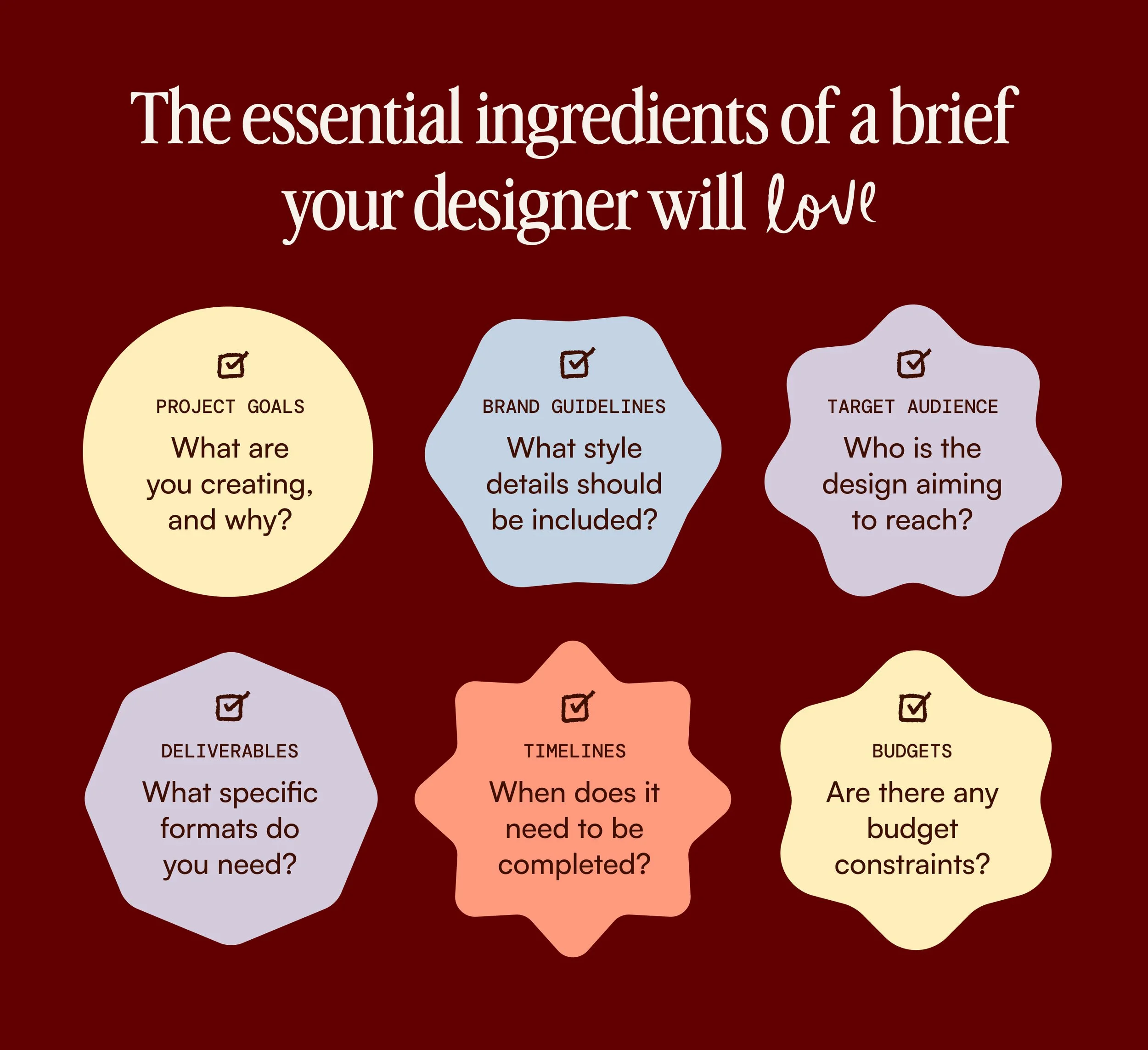
Target audience → Who is the design for?
Think about who will actually see or use this design – knowing your audience helps your designer create something that speaks to the right people.
The more detail you can give about your audience (age, interests, needs) the more tailored and effective the design will be.
Project overview & goals → What are you creating, and why?
Every design has a reason for existing. Is it meant to inspire, inform, sell, or simply entertain? Being clear about the goal helps your designer make decisions about layout, style, and messaging that actually work.
Brand guidelines → What style details or assets should be included?
Share anything that sets the tone or style for the piece: brand colours, fonts, logos, imagery style, or even examples of designs you love. If you have brand guidelines, include a link.
These details give your designer a starting point and help the design feel consistent with your overall brand, saving time on revisions later.
Budget & project scope → What limits should the designer be aware of?
Being upfront about your budget isn’t awkward – it’s practical. It allows your designer to plan the scope, suggest creative options within your limits, and avoid surprises for both sides.
Timeline & key dates → When does the project need to be completed?
Deadlines aren’t just about keeping the project on schedule – they help your designer prioritise, plan for revisions, and make sure there’s enough time to polish the final design.
Be clear about dates and any important milestones so everyone knows what to expect.
Design deliverables → What specific file types or formats do you need?
Specify the file types, sizes, and formats you’ll need – whether it’s a JPEG for Instagram, a PDF for print, or the editable source files for future tweaks.
If you don’t know the specifics upfront, don’t panic! Not everyone speaks “file format,” and you’re not expected to. A good designer will guide you through what’s needed and help you choose the right options for where the design will live.
The more detail you can provide from the start, the smoother the handoff will be; and the easier it’ll be to use the design exactly how you intended.
Finding the Right Balance
Not every project requires every detail – but including the essentials from the start gives both you and your designer clarity and confidence. It sets expectations, avoids unnecessary back-and-forth, and makes it more likely that the final design will hit the mark.
Think of your brief as a roadmap: the clearer it is, the smoother the journey. It’s not about stifling creativity; it’s about giving your designer the tools they need to create something that truly works for you.
Now that you know what goes into a great brief, you’re all set to start your next project with confidence. Take a little extra time upfront, share the details, and watch your ideas come to life; without the guesswork or endless back-and-forth. Your designer (and your future self) will thank you.

Hi, I'm Steph! Designer, tinkerer, and your go-to for calm, considered design advice. This is where I share tips, tools, and resources for building a business (and a website) that feels like home.
View All Posts
